
Sugar bowl
Unknown Artist
ca. 1780–85
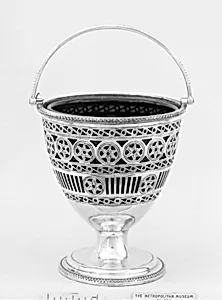
Medium
Sheffield plate
Dimensions
3 1/2 × 3 in. (8.9 × 7.6 cm)
Classification
Metalwork-Silverplate
Culture
British
Department
European Sculpture and Decorative Arts
Museum
Metropolitan Museum of Art, New York, NY
Credit
Rogers Fund, 1913
Accession Number
13.8.8a, b
Rights
Public Domain
Art Historical Context
This elegant sugar bowl, crafted around 1780–85 in Sheffield plate, exemplifies British innovation in 18th-century metalwork. Sheffield plate, developed in the mid-1700s by Thomas Boulver in Sheffield, England, fused thin sheets of silver onto a copper core through a rolling process. This technique produced the luster of solid silver at a fraction of the cost, making luxurious tableware accessible to the growing middle class during the Georgian era. Measuring just 3½ × 3 inches, this compact vessel was likely part of a tea service, reflecting Britain's booming tea culture fueled by the British Empire's sugar trade from the Caribbean. Sugar bowls like this became household staples, symbolizing refined domesticity amid neoclassical tastes. Its presence in the Metropolitan Museum of Art's European Sculpture and Decorative Arts collection, acquired via the Rogers Fund in 1913, highlights its enduring appeal as a testament to industrial ingenuity and everyday elegance. Though the artist remains unknown, the bowl's craftsmanship underscores Sheffield's dominance in silverplate production, which employed thousands and influenced global decorative arts until electroplating overtook it in the 19th century. A charming glimpse into refined leisure!