
Sugar box
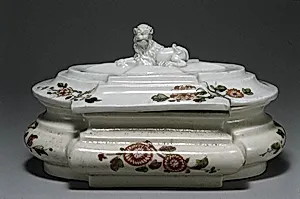
Medium
Hard-paste porcelain
Dimensions
Overall (confirmed): 3 5/8 x 7 1/8 x 4 3/4 in. (9.2 x 18.1 x 12.1 cm)
Classification
Ceramics-Porcelain
Culture
Austrian, Vienna
Department
European Sculpture and Decorative Arts
Museum
Metropolitan Museum of Art, New York, NY
Credit
The Hans Syz Collection, Gift of Stephan B. Syz and John D. Syz, 1995
Accession Number
1995.268.298a, b
Rights
Public Domain
Tags
Art Historical Context
This exquisite sugar box from the Viennacelain Manufactory during the Claudius Innocentius duquier period (ca. 1720–25) exemplifies early 18th-century European in ceramics. Crafted from hard-paste porcelain—a durable, translucent material rivaling prized Chinese imports—the box measures 3⅝ × 7⅛ × 4¾ inches and served as a luxurious container for sugar, then a rare and costly commodity symbolizing wealth and refinement among Europe's aristocracy. Founded in 1718 by entrepreneur Claudius Innocentius du Pa, who acquired Meissen's secret formula, the Vienna factory marked Austria's entry into the elite world of true porcelain production. This piece reflects the manufactory's bold experimentation with vivid overglaze enamels and molded forms, adorned with dynamic lions—emblems of strength and nobility—and blooming flowers evoking the Baroque era's opulent naturalism. Housed in The Metropolitan Museum of Art's European Sculpture and Decorative Arts department (The Hans Syz Collection, 1995), the sugar box highlights Vienna's brief but brilliant porcelain legacy before imperial takeover in 1744, offering visitors a tangible glimpse into the lavish tastes of the Habsburg court.