
Sukia Figure
Unknown Artist
11th–16th century
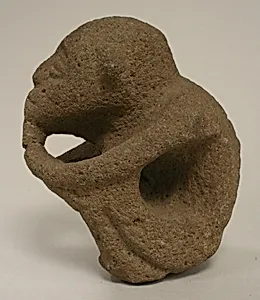
Medium
Stone
Dimensions
H. 6 11/16 x W. 4 3/4 x D. 5 11/16 in. (17 x 12.1 x 14.4 cm)
Classification
Stone-Sculpture
Culture
Atlantic Watershed
Department
Arts of Africa, Oceania, and the Americas
Museum
Metropolitan Museum of Art, New York, NY
Credit
The Michael C. Rockefeller Memorial Collection, Bequest of Nelson A. Rockefeller, 1979
Accession Number
1979.206.428
Rights
Public Domain
Tags
Art Historical Context
This enigmatic Sukia figure, carved from stone by an unknown artist from the Atlantic Watershed culture of Colombia between the 11th and 16th centuries, stands as a poignant testament to pre-Columbian artistry in South America. Measuring just over 6 inches tall, this compact human figure the skill of ancient sculptors who transformed hard stone into expressive forms, likely intended for personal or ritual use. Its modest dimensions suggest portability, perhaps carried by shamans or kept in domestic shrines. In the Atlantic Watershed region—spanning coastal and riverine areas influenced by diverse indigenous traditions—such stone sculptures often embodied ancestors, spirits, or protective deities. The figure's stylized human form reflects a deep cultural reverence for the human-spiritual connection, common in Americas art where stone's durability symbolized eternity. Carved with simple tools, these works highlight technical prowess in rendering anatomy and posture, evoking quiet power without ornate decoration. Now part of The Michael C. Rockefeller Memorial Collection at The Metropolitan Museum of Art, gifted through Nelson A. Rockefeller's bequest in 1979, this Sukia figure invites visitors to ponder the enduring mysteries of vanished voices, bridging ancient rituals with our modern gaze.