
Sumo Wrestling
19th century
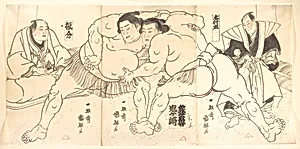
Medium
Matted painting; ink on paper
Dimensions
14 3/8 x 29 5/16 in. (36.5 x 74.5 cm)
Classification
Paintings
Culture & Period
Japan · Edo period (1615–1868)
Department
Asian Art
Museum
Metropolitan Museum of Art, New York, NY
Credit
Gift of Lincoln Kirstein, 1960
Accession Number
60.129
Rights
Public Domain
Tags
Art Historical Context
Utagawa Kuniteru'sSumo Wrestling*, a 19th-century ink on paper from Japan's Edo period (161–1868), vividly captures the raw power and ritual drama of sumo matches. Measuring 14 3/8 x 29 5/16 inches, this matted work belongs to the Utagawa school, renowned for ukiyo-e ("pictures of the floating world") art that celebrated everyday spectacles like theater, festivals, and sports. Kuniteru, active in the mid-1800s, skillfully rendered muscular wrestlers in dynamic poses, emphasizing their physical prowess amid the dohyo ring. Sumo held immense cultural significance in Edo Japan, evolving from Shinto rituals into a professional sport that drew massive crowds and star athletes. This painting reflects the era's fascination with heroic figures, blending athleticism with spiritual symbolism—wrestlers as embodiments of strength and discipline. Ink on paper, a staple of Japanese painting, allowed Kuniteru to achieve fluid lines and subtle shading, evoking motion and tension with minimalist elegance. Now in the Metropolitan Museum of Art's Asian Art collection (gift of Lincoln Kirstein, 1960), *Sumo Wrestling* offers visitors a window into Japan's vibrant popular culture, where art immortalized the thrill of the ring and the cheers of the masses.