
Suona (嗩吶 )
Unknown Artist
19th century
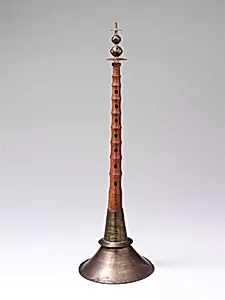
Medium
Rosewood, brass.
Dimensions
L. 17 3/8 × Diam. 5 3/8 in. (44.2 × 13.7 cm)
Classification
Aerophone-Reed Vibrated-double reed
Culture
Chinese
Department
Musical Instruments
Museum
Metropolitan Museum of Art, New York, NY
Credit
The Crosby Brown Collection of Musical Instruments, 1889
Accession Number
89.4.20
Rights
Public Domain
Art Historical Context
Nestled in the Metropolitan Museum of Art's renowned Crosby Brown Collection of Musical Instruments this 19th-century suona (嗩吶) exemplifies exquisite Chinese craftsmanship in wood and metal. Crafted from rosewood for its resonant body and brass for the flared bell, the instrument measures 17⅜ inches in length with a 5⅜-inch diameter. As a double-reed aerophone, it produces its signature piercing, powerful tone through vibrating reeds, making it ideal for outdoor performances where it cuts through crowds and ambiance. Originating in China with influences tracing back to Central Asian traditions via the Silk Road, the suona has been a staple in folk ensembles since at least the Ming dynasty, thriving into the Qing era of the 19th century. Its bold sound graces weddings, funerals, festivals, and theatrical operas, symbolizing joy or mourning with unmatched volume and expressiveness. The combination of rosewood's warm acoustics and brass's brilliant projection highlights the artisan's skill in balancing form and function. Today, this suona invites visitors to imagine vibrant processions in imperial China, underscoring the instrument's enduring cultural role in preserving musical heritage. A testament to everyday artistry, it bridges sound, ritual, and history in the Met's galleries.