
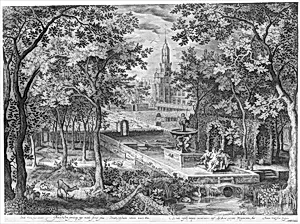
Susanna and the Elders
Medium
Engraving; first state of three
Dimensions
sheet: 15 1/16 x 20 1/4 in. (38.3 x 51.5 cm)
Classification
Prints
Department
Drawings and Prints
Museum
Metropolitan Museum of Art, New York, NY
Credit
The Elisha Whittelsey Collection, The Elisha Whittelsey Fund, 1949
Accession Number
49.95.2272
Rights
Public Domain
Tags
Art Historical Context
This engraving captures the dramatic biblical tale of Susanna and the Elders, a story from the Book of Daniel that has inspired artists for centuries. It depicts the virtuous Susanna surprised while bathing by two lecherous elders who attempt to blackmail her, only to face justice when their false accusations are exposed. David Vinckboons, a Flemish artist known for his lively landscapes and narrative scenes, designed the composition, which was skillfully translated into print by engraver Jan van Londerseel. As a first-state engraving, the work showcases the intricate line work and tonal contrasts typical of early modern printmaking, allowing wider audiences to encounter this moral tale. The scene unfolds in a lush garden setting, complete with fountains, trees, and human figures alongside animals, blending natural beauty with the unfolding drama to heighten its emotional impact. Housed in the Metropolitan Museum of Art’s collection of prints, this piece reflects the 17th-century interest in moralizing stories and the growing role of engravings in sharing art beyond elite circles. Its detailed landscape elements invite viewers to linger on both the story’s ethical lessons and the artists’ harmonious vision of nature and human experience.
About the Artist
David Vinckboons|Jan van Londerseel · 1576–1632
David Vinckboons (baptized 13 August 1576 – c. 1632) was a Flemish-born painter who became a pivotal figure in the Dutch Golden Age. Born in Mechelen in the Southern Netherlands, he was the son of Philips Vinckboons, a watercolor painter on canvas, under whom he studied as his sole teacher, according to Karel van Mander. The family fled religious turmoil, moving first to Antwerp around 1580, then ...