
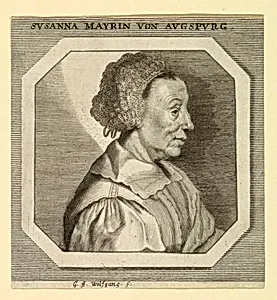
Susanna Mayrin of Augsburg
ca. 1680-1700
Classification
Department
Smithsonian Collection
Museum
Smithsonian American Art Museum
Credit
Smithsonian American Art Museum
Accession Number
1957-41-107
Rights
Public Domain
About this artwork
Research in Progress
Art Historical Context
**Susanna Mayrin ofsburg** is a captivating print created by George-André Wolfgang1631–1716) around 1680–1700. This artwork depicts Susanna Mayrin, a figure from Augsburg, a vibrant German city renowned during the Baroque era for its craftsmanship in silverwork, printing, and portraiture. Wolfgang, active in the late 17th century, contributed to the rich tradition of European printmaking, where detailed engravings or etchings preserved the likenesses of local notables, blending realism with the dramatic flair of the period. As a print, the work exemplifies a key medium of the time: affordable and reproducible, allowing portraits to circulate widely beyond elite patrons. Though the specific technique remains under study—research is ongoing at the Smithsonian American Art Museum—this classification highlights its role in democratizing art. Housed in the Smithsonian's collection, it bridges European Baroque traditions with American institutional interests, inviting us to ponder Mayrin's story amid Augsburg's cultural renaissance. This piece sparks curiosity about everyday lives captured in artistry, reminding visitors of prints' enduring power to connect us across centuries. (178 words)