
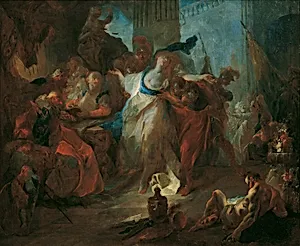
Susanna vor den Richtern
um 1750/1755
Medium
Öl auf Leinwand
Dimensions
57 x 68 cm
Classification
Gemälde
Department
Belvedere Collection
Museum
Belvedere
Credit
Belvedere, Vienna
Accession Number
3224
Rights
Public Domain
About this artwork
Im Alten Testament wird die Geschichte der Susanna erzählt (Daniel 13,1–64), der zwei lüsterne Alte im Bade auflauern. Die ehrbare Ehefrau bleibt jedoch standhaft und wird daraufhin von den beiden Zurückgewiesenen fälschlich des Ehebruchs bezichtigt. Dargestellt ist hier aber jener dramatische Höhepunkt der Erzählung, an dem die Verleumdete vor Gericht gebracht wird.
Art Historical Context
Franz Anton Maulbertsch, leading Austrian painter of the late Baroque era, captures a pivotal moment from the Apocryphal Book of Daniel in his oil canvas *Susanna vor den Rich* (c. 1750–1755). The scene depicts the virtuous Susanna, falsely accused of adultery by two lustful elders she rebuffed while bathing. Brought before the judges, her expression conveys defiance and innocence amid rising tension, a dramatic climax drawn from Daniel 13:1–64. This modest 57 x 68 cm work exemplifies Maulbertsch's mastery of emotional intensity, blending Baroque theatricality with emerging Rococo elegance. Maulbertsch, often called the "Austrian Rembrandt" for his innovative use of chiaroscuro—bold contrasts of light and shadow—infuses the composition with psychological depth. Light dramatically illuminates Susanna's face, symbolizing truth against the elders' shadowy deceit, while swirling drapery and expressive gestures heighten the moral drama. Oil on canvas allowed him to achieve luminous colors and fluid brushwork, techniques honed in his frescoes for churches across Central Europe. Housed in Vienna's Belvedere Collection, this painting reflects 18th-century fascination with biblical tales of chastity and justice, inspiring generations of artists from Rubens to Artemisia Gentileschi. It invites viewers to ponder timeless themes of integrity triumphing over corruption.
About the Artist
Franz Anton Maulbertsch · 1724–1796
Comment on works: Allegory; Portraits; Religious