
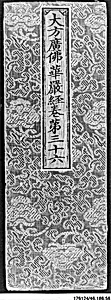
Sutra Cover
Unknown Artist
16th century
Medium
Silk, metallic thread
Dimensions
Overall: 13 3/4 x 4 3/4 in. (34.9 x 12.1cm)
Classification
Textiles-Woven
Culture
China
Department
Asian Art
Museum
Metropolitan Museum of Art, New York, NY
Credit
Rogers Fund, 1946
Accession Number
46.186.58
Rights
Public Domain
Art Historical Context
This exquisite *Sutra Cover* from16th-century China, crafted by an unknown artist, exemplifies the pinnacle of Ming Dynasty textile artistry. Woven from luxurious silk and shimmering metallic threads, it measures a compact 13¾ x 4¾ inches, designed to encase sacred Buddhist sutras—scrolls containing profound teachings on enlightenment and compassion. Housed in the Metropolitan Museum of Art's Asian Art Department (acquired via the Rogers Fund in 194), this piece reflects the era's reverence for Buddhism, where such covers protected holy texts during rituals, study, or transport in monasteries and temples. The use of metallic threads—likely gold or silver—added a divine glow, symbolizing the ethereal light of Buddhist wisdom and imperial splendor. Chinese weavers mastered techniques like *kesi* (slit-tapestry weaving), allowing intricate patterns to emerge without embroidery, showcasing technical virtuosity and spiritual devotion. Motifs on sutra covers often included protective dragons, lotuses, or flaming jewels, blending artistry with religious symbolism to ward off harm and invoke blessings. As a rare surviving example of woven textiles, this cover highlights China's global influence in silk production and Buddhist material culture, bridging the opulent courts of the Ming with everyday piety. Visitors will appreciate its delicate sheen, a testament to artisans whose skill turned fabric into a vessel for the sacred.