
Sutra Cover
Ming dynasty (1368–1644), c. 1590's
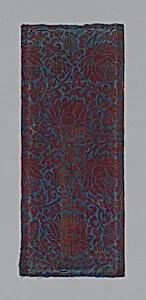
Medium
Silk, warp-float faced 4:1 satin weave with supplementary patterning wefts bound in weft-float-faced 1:4 satin interlacings
Dimensions
35.4 × 14.7 cm (14 × 5 3/4 in.); Repeat: 16 × 11.1 cm (6 1/4 × 4 3/8 in.)
Classification
textile
Department
Textiles
Museum
Art Institute of Chicago
Accession Number
157342
Rights
Public Domain
Art Historical Context
This exquisite **Sutra Cover** from the Ming dynasty (1368–1644), dating to around the 1590s, exemplifies the pinnacle of Chinese silk weaving during a golden age of imperial craftsmanship. Produced by an unknown artist, this small textile (35.4 × 14.7 cm) served as a protective and decorative cover for Buddhist sutras—sacred scriptures central to spiritual practice. In Ming China, such covers were treasured in temples and among the elite, blending reverence for Buddhist teachings with the era's opulent material culture. Crafted from silk using a sophisticated warp-float faced 4:1 satin weave, the piece incorporates supplementary patterning wefts bound in weft-float-faced 1:4 satin interlacings. This advanced technique created a lustrous surface with repeating motifs (16 × 11.1 cm units), allowing for intricate designs that shimmered like liquid gold under temple light. Ming textile innovation reflected the dynasty's economic prosperity and technical mastery, rivaling contemporary porcelain and lacquer arts. Housed in the Art Institute of Chicago's Textiles Department, this cover invites us to appreciate how everyday religious objects embodied profound artistry and devotion, bridging the spiritual and the sensual in late imperial China.
About the Artist
Unknown
The artist designated as "Unknown" in our virtual museum's collection exemplifies a poignant chapter in art history: creators whose identities have faded into obscurity despite the enduring power of their work. With only one known artwork attributed to them in our holdings, this figure represents countless anonymous hands that shaped visual culture across centuries. Museums worldwide, including th...