
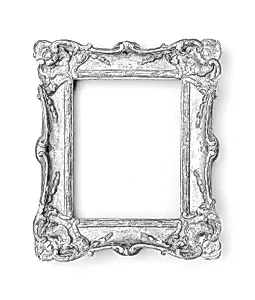
Swept frame
Unknown Artist
mid-18th century (style French, ca. 1735)
Medium
Oak lower moldings and feather keys; lime upper moldings
Dimensions
Overall: 13 7/16 × 11 9/16 in. (34.2 × 29.3 cm) Sight: 8 9/16 × 6 11/16 in. (21.8 × 17 cm) Rabbet: 9 5/8 × 7 11/16 in. (24.5 × 19.5 cm)
Classification
Frames
Culture
Southern Germany
Department
Robert Lehman Collection
Museum
Metropolitan Museum of Art, New York, NY
Credit
Robert Lehman Collection, 1975
Accession Number
1975.1.2276
Rights
Public Domain
Art Historical Context
This swept frame, crafted in Southern Germany around 1735, exemplifies the elegant Rococo aesthetic that swept across Europe during the mid-eighteenth century. Although the maker remains unknown, the frame reflects the strong influence of French design on German artisans, blending ornate curves with refined proportions suited to small-scale paintings or works on paper. Such frames were essential companions to artworks, enhancing their visual impact while serving as status symbols in aristocratic and bourgeois interiors. The construction reveals sophisticated woodworking techniques of the period. Lower moldings and feather keys are fashioned from durable oak for structural strength, while lighter limewood forms the upper moldings, allowing for delicate carving and fluid “swept” lines characteristic of the style. This combination of materials provided both stability and the ability to create intricate, flowing ornament. Part of the renowned Robert Lehman Collection at The Metropolitan Museum of Art, the frame offers visitors a glimpse into the collaborative world of eighteenth-century art production, where framemakers worked alongside painters to create harmonious ensembles.