
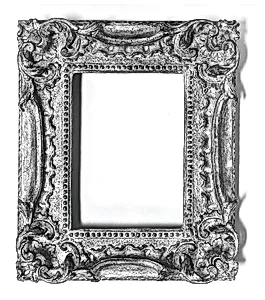
Rococo frame
Unknown Artist
ca. 1765
Medium
Pine
Dimensions
Overall: 12 5/16 × 10 1/16 in. (31.2 × 25.5 cm) Sight: 7 5/16 × 5 1/8 in. (18.5 × 13 cm) Rabbet: 7 7/8 × 5 13/16 in. (20 × 14.7 cm)
Classification
Frames
Culture
British
Department
Robert Lehman Collection
Museum
Metropolitan Museum of Art, New York, NY
Credit
Robert Lehman Collection, 1975
Accession Number
1975.1.2309
Rights
Public Domain
Art Historical Context
This exquisite Rococo frame, crafted around 1765 in Britain from pine wood, exemplifies the playful elegance of the mid-18th-century style. Rococo, which flourished across Europe from the 1730s to 1770s, reacted against the grandeur of Baroque with its lighthearted asymmetry, scrolling motifs inspired by shells, foliage, and rockwork, and a sense of refined whimsy. Though the artist remains unknown, the frame's intricate carving highlights the skilled craftsmanship of British workshops, where such ornate surrounds elevated paintings as symbols of taste and sophistication among the aristocracy. Measuring 12 5/16 × 10 1/16 inches overall, with a sight opening of 7 5/16 × 5 1/8 inches, this pine frame was designed to hold a modest portrait or miniature, its rabbet groove precisely accommodating the artwork. Pine's affordability made it a practical choice for elaborate carving, often later gilded for added opulence—though here its natural warmth shines through. Part of the Robert Lehman Collection at The Metropolitan Museum of Art since 1975, it offers a glimpse into Georgian-era interiors, where frames were not mere supports but artistic statements reflecting cultural shifts toward intimacy and delight in domestic spaces.