
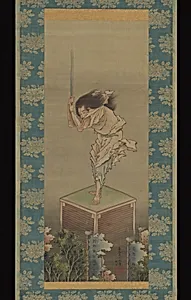
Sword Dancer
19th century
Medium
Hanging scroll; ink and color on silk
Dimensions
Image: 27 3/8 × 10 15/16 in. (69.5 × 27.8 cm) Overall with mounting: 62 5/8 × 16 15/16 in. (159 × 43 cm) Overall with knobs: 62 5/8 × 19 in. (159 × 48.2 cm)
Classification
Paintings
Culture & Period
Japan · Edo period (1615–1868)
Department
Asian Art
Museum
Metropolitan Museum of Art, New York, NY
Credit
The Howard Mansfield Collection, Purchase, Rogers Fund, 1936
Accession Number
36.100.28
Rights
Public Domain
Tags
Art Historical Context
Katsushika Hokusai’s *Sword Dancer*, created during Japan’s Edo period (1615–1868), captures the dynamic grace of a performer wielding swords in mid-movement. Hokusai, celebrated for his mastery of ukiyo-e, here turns to painting on silk rather than his more famous woodblock prints. The hanging scroll format was traditionally used for works meant to be displayed temporarily during tea ceremonies or seasonal viewings, allowing the delicate imagery to be appreciated up close before being rolled away for storage. Executed in ink and color on silk, the painting highlights Hokusai’s ability to convey motion and tension through fluid brushwork and subtle layering of hues. The subject—a dancer balancing or brandishing swords—reflects popular entertainment of the era, when such performances blended martial skill with theatrical flair. As part of the Metropolitan Museum’s Asian Art collection, this scroll offers modern viewers a vivid glimpse into Edo-period cultural life and Hokusai’s versatility across media.
About the Artist
Katsushika Hokusai · 1760–1849
Katsushika Hokusai (1760-1849) stands as one of history's most influential artists, a Japanese master who revolutionized the ukiyo-e woodblock print tradition and profoundly shaped Western art. Born in the Katsushika district of Edo (modern-day Tokyo) to an artisan family, Hokusai lived through nearly nine decades of extraordinary creative evolution, adopting over thirty different artistic names t...