
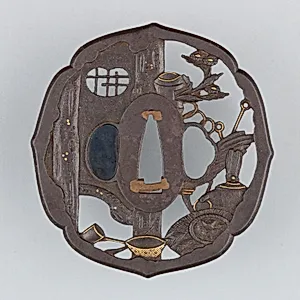
Sword Guard (Tsuba)
Unknown Artist
18th century
Medium
Iron, gold, copper-gold alloy (shakudō), copper
Dimensions
H. 3 3/8 in. (8.6 cm); W. 3 1/4 in. (8.3 cm); thickness 3/16 in. (0.5 cm); Wt. 3.6 oz. (102.1 g)
Classification
Sword Furniture-Tsuba
Culture
Japanese
Department
Arms and Armor
Museum
Metropolitan Museum of Art, New York, NY
Credit
Gift of Mrs. George A. Crocker (Elizabeth Masten), 1937
Accession Number
38.25.41
Rights
Public Domain
Art Historical Context
This exquisite sword guard, or *tsuba*, hails from 18th-century Japan during the Edo period, a when samurai culture flourished amid relative peace. As a key component of the katana or wakizashi sword mountings, the tsuba served a practical purpose: protecting the hand from an opponent's blade while allowing fluid blade movement. Yet, these fittings transcended utility, becoming miniature canvases for master metalworkers who elevated them to high art. Crafted primarily from iron, this tsuba is enriched with inlays of gold, shakudō (a copper-gold alloy prized for its deep, velvety black patina), and copper. These mixed-metal techniques, known as *zōgan* inlay, demanded extraordinary skill—artisans meticulously hammered and chiseled soft metals into precise recesses on the hardened iron base. Measuring just 3⅜ by 3¼ inches, its compact form (weighing a substantial 3.6 ounces) highlights the precision of Japanese metalworking traditions. In Japanese culture, tsuba symbolized status and refined taste, often customized for individual samurai. This example, a generous 1937 gift to the Metropolitan Museum of Art from Mrs. George A. Crocker, invites visitors to appreciate the fusion of function, beauty, and artistry in Arms and Armor masterpieces.