
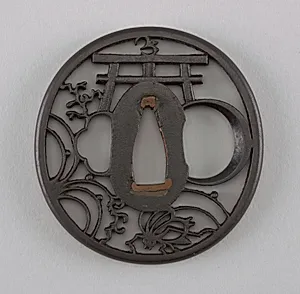
Tsuba
19th century
Classification
metalwork
Department
Smithsonian Collection
Museum
Smithsonian American Art Museum
Credit
Bequest of George Cameron Stone
Accession Number
1936-4-330
Rights
Public Domain
About this artwork
Research in Progress
Art Historical Context
Welcome to the Smithsonian American Art Museum's collection of metalwork. This 19th-century *Tsuba*, a traditional Japanese sword guard, exemplifies masterful craftsmanship of Edo-period Japan (1603–1868) or the early Meiji era. Positioned at the base of a katana's hilt, the tsuba served both a practical purpose—protecting the hand during combat—and an artistic one, transforming a weapon into a canvas for intricate designs. Though the specific medium and motifs remain under research, tsuba were typically forged from iron, copper, or shakudō (a copper-gold alloy), often pierced, chased, or inlaid with gold and silver to depict nature, mythology, or daily life. These guards hold profound cultural significance in samurai society, blending functionality with aesthetic refinement. Artisans elevated metalwork to high art, employing techniques like nunome-zogan (metal inlay) and ushiroke (openwork) to create lightweight yet durable pieces that balanced warrior utility with poetic elegance. This anonymous example reflects Japan's rich tradition of arms decoration, where even battle gear embodied Zen-like harmony and impermanence. Generously bequeathed by George Cameron Stone, a renowned collector of arms and armor, this tsuba invites us to ponder the artistry hidden in history's tools of war. Ongoing research promises to unveil more about its unique story—stay tuned!
About the Artist
Unknown
The artist designated as "Unknown" in our virtual museum's collection exemplifies a poignant chapter in art history: creators whose identities have faded into obscurity despite the enduring power of their work. With only one known artwork attributed to them in our holdings, this figure represents countless anonymous hands that shaped visual culture across centuries. Museums worldwide, including th...