
Sword Guard (Tsuba)
Unknown Artist
18th century
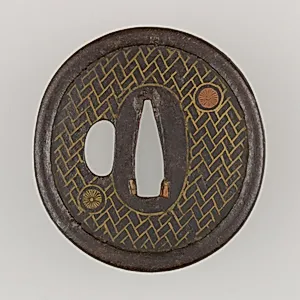
Medium
Iron, brass, copper
Dimensions
H. 3 in. (7.6 cm); W. 2 7/8 in. (7.3 cm); thickness 3/16 in. (0.5 cm); Wt. 3.6 oz. (102.1 g)
Classification
Sword Furniture-Tsuba
Culture
Japanese
Department
Arms and Armor
Museum
Metropolitan Museum of Art, New York, NY
Credit
Funds from various donors, 1946
Accession Number
46.122.134
Rights
Public Domain
Art Historical Context
This exquisite sword guard, or *tsuba*, hails from 18th-century Japan, a product of the Edo period when samurai culture flourished amid relative peace. Crafted from with inlays of brass and copper it measures just 3 inches high and weighs a mere 3.6 ounces, perfectly balancing functionality and artistry. As a key component of a katana's hilt, the *tsuba* protected theder's hand while serving as a canvas for intricate designs—though the motif here remains a mystery due to the unknown artist, its mixed metals suggest skilled techniques like *zōgan* inlay, where softer alloys were hammered into the hardened iron base. In Japanese arms and armor, *tsuba* transcended mere utility, becoming status symbols adorned with motifs from nature, mythology, or daily life. During the 18th century, as swordsmanship shifted toward ceremonial display, these fittings evolved into miniature sculptures, showcasing the era's metallurgical mastery and aesthetic refinement. This example, acquired by the Metropolitan Museum of Art in 1946 through donor funds, exemplifies how Japanese metalworkers blended strength with elegance. Today, it invites us to appreciate the fusion of warfare and art, reminding visitors of the samurai's world where every detail mattered.