
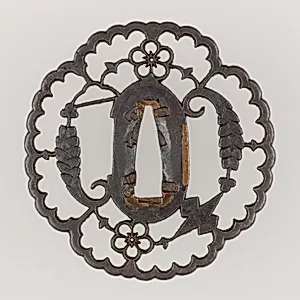
Sword Guard (Tsuba)
late 16th century
Medium
Iron, copper
Dimensions
H. 3 1/8 in. (7.9 cm); W. 3 in (7.6 cm); thickness 3/16 in. (0.5 cm); Wt. 2.5 oz. (71 g)
Classification
Sword Furniture-Tsuba
Culture
Japanese
Department
Arms and Armor
Museum
Metropolitan Museum of Art, New York, NY
Credit
Purchase, Arthur Ochs Sulzberger Gift, 2002
Accession Number
2002.500
Rights
Public Domain
Art Historical Context
This exquisite **Sword Guard (Tsub)** from the Kyōukashi School, crafted in the late 16 century, exemplifies the pinnacle Japanese metalworking during the turbulent Sengoku period. Tsuba served as protective hand guards on samurai swords, but these were far more than functional—they were wearable art, symbolizing the owner's status and taste. Measuring just 3 1/8 inches high weighing a mere 2.5 ounces, this iron piece inlaid with copper showcases the school's signature *sukashi* technique: intricate openwork piercing that creates delicate, airy patterns, often evoking nature's elegance like flowing vines or mythical motifs. The Kyōsukashi masters, active in Kyoto, elevated tsuba from mere armor to collector's treasures, blending strength with fragility. Forged from tough iron and accented with softer copper for contrast, the guard's precision—down to its 3/16-inch thickness—reflects centuries-old skills passed through apprenticeships. In a warrior culture where swords embodied the soul, such fittings humanized the samurai ethos, merging utility with poetic beauty. Today, housed in the Metropolitan Museum of Art's Arms and Armor Department (purchased with the Arthur Ochs Sulzberger Gift in 2002), this tsuba invites us to appreciate Japan's fusion of war and artistry. Imagine it glinting on a katana, a tiny testament to an era of endless battles and boundless creativity.