
Sword Guard (Tsuba)
Unknown Artist
ca. 1615–1868
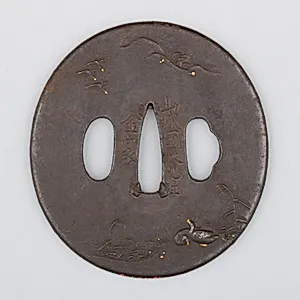
Medium
Iron, gold, silver
Dimensions
H. 3 in. (7.6 cm); W. 2 3/4 in. (7 cm); thickness 3/16 in. (0.5 cm); Wt. 3.9 oz. (110.6 g)
Classification
Sword Furniture-Tsuba
Culture
Japanese
Department
Arms and Armor
Museum
Metropolitan Museum of Art, New York, NY
Credit
Gift of Bashford Dean, 1919
Accession Number
19.154.5
Rights
Public Domain
Tags
Art Historical Context
This exquisite **Sword Guard (Tsuba)**, in Japan during the Edo period (. 1615–1868), exemplifies the fusion of functionality and artistry in samurai weaponry. Measuring just 3 inches high, this iron guard—adorned with gold and inlays depicting geese—was designed to protect the hand while wielding a katana or wakizashi. Produced during a time of relative peace, when sword fittings evolved from mere utility to status symbols, tsuba like this one became canvases for intricate designs, showcasing the wearer's refined taste. The artwork's surface likely features nuanced techniques such as *zōgan* (inlaying soft metals like gold and silver into carved iron), creating shimmering contrasts that highlight the graceful geese in flight or at rest. Geese motifs, common in Japanese art, evoke seasonal migration, autumnal beauty, and the fleeting nature of life—poetic themes resonant with Zen influences of the era. Housed in the Metropolitan Museum of Art's Arms and Armor Department (gift of Bashford Dean, 1919), this tsuba invites us to appreciate how everyday objects in feudal Japan embodied profound cultural elegance, bridging warfare and aesthetics.