
Sword Guard (Tsuba)
Unknown Artist
ca. 1615–1868
Medium
Iron, copper
Dimensions
H. 2 11/16 in. (6.8 cm); W. 2 1/2 in. (6.4 cm); thickness 3/16 in. (0.5 cm); Wt. 3.1 oz. (87.9 g)
Classification
Sword Furniture-Tsuba
Culture
Japanese
Department
Arms and Armor
Museum
Metropolitan Museum of Art, New York, NY
Credit
Gift of Bashford Dean, 1919
Accession Number
19.154.41
Rights
Public Domain
Tags
Art Historical Context
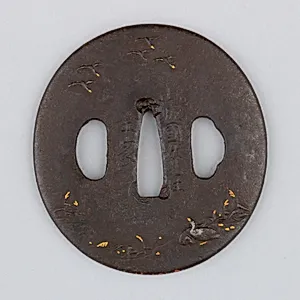
This delicate iron sword guard, or *tsuba*, hails from Japan's Edo period (ca.1615–1868), a time when samurai culture its artistic zenith. Measuring a compact 2 11/16 by 2 1/2 inches, it was designed to shield the wielder's hand from an opponent's blade while adorning the hilt of a katana or wakizashi. Crafted primarily from iron for durability, with copper inlays or accents, these fittings blended functionality with exquisite craftsmanship, often produced by specialized metalworkers in schools like those of Nara or Edo. The artwork's motif of geese—evident from its thematic tags—captures a poetic essence of Japanese aesthetics. Geese in flight symbolize seasonal migration and the fleeting beauty of nature, a recurring theme in ukiyo-e prints and decorative arts of the era. Techniques likely included piercing (openwork) for lightness and intricate hammering or inlaying copper to highlight the birds against the dark iron ground, showcasing the precision of *tsuba* makers who elevated everyday armor into wearable sculpture. Housed in the Metropolitan Museum of Art's Arms and Armor Department as a 1919 gift from collector Bashford Dean, this *tsuba* reflects the cultural reverence for harmony between warrior prowess and artistic refinement, inviting visitors to appreciate the hidden artistry of samurai swords.