
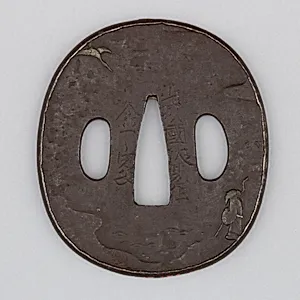
Sword Guard (Tsuba)
Unknown Artist
ca. 1615–1868
Medium
Iron, copper-silver alloy (shibuichi), gold
Dimensions
H. 2 11/16 in. (6.8 cm); W. 2 7/16 in. (6.2 cm); thickness 3/16 in. (0.5 cm); Wt. 2.7 oz. (76.5 g)
Classification
Sword Furniture-Tsuba
Culture
Japanese
Department
Arms and Armor
Museum
Metropolitan Museum of Art, New York, NY
Credit
Gift of Bashford Dean, 1919
Accession Number
19.154.12
Rights
Public Domain
Tags
Art Historical Context
This exquisite **Sword Guard (Tsub)**, dating to the Edo period (ca.1615–1868), exemplifies the pinnacle of Japanese metalworking artistry during a time of relative peace when samurai swords evolved from battlefield tools into symbols of status and refinement. Crafted for a katana or wakizashi, the tsuba served a practical purpose—shielding the hand from the blade—while showcasing the wearer's taste through intricate design. Though the artist remains unknown, such pieces were often produced by specialized workshops in cities like Edo (modern Tokyo), blending functionality with aesthetic splendor. Forged primarily from iron, the guard is enriched with shibuichi—a copper-silver alloy prized for its subtle, smoky patina—and accents of shimmering gold, likely applied through techniques like inlay (zōgan) or damascening. Measuring just 2 11/16 inches high, its compact form (6.8 cm) belies the meticulous craftsmanship, weighing a mere 2.7 ounces. These materials not only enhanced durability but also allowed for nuanced surface treatments that caught the light during ceremonial displays. Housed in the Metropolitan Museum of Art's Arms and Armor Department (gift of Bashford Dean, 1919), this tsuba reflects Japan's cultural reverence for the sword as an extension of the warrior's soul. Visitors, imagine a samurai adjusting his grip, the guard's gleam affirming his honor amid the era's rigid social codes. A testament to Edo ingenuity, it invites us to appreciate the artistry hidden in everyday armor.