
Sword Guard (Tsuba)
Unknown Artist
ca. 1615–1868
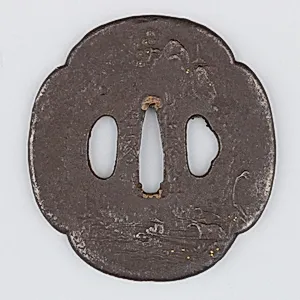
Medium
Iron, copper
Dimensions
H. 3 7/16 in. (8.7 cm); W. 3 3/16 in. (8.1 cm); thickness 3/16 in. (0.5 cm); Wt. 5.2 oz. (147.4 g)
Classification
Sword Furniture-Tsuba
Culture
Japanese
Department
Arms and Armor
Museum
Metropolitan Museum of Art, New York, NY
Credit
Gift of Bashford Dean, 1919
Accession Number
19.154.44
Rights
Public Domain
Tags
Art Historical Context
This exquisite **Sword Guard (Tsub)**, crafted in iron and copper around 1615–1868, hails from Japan's Edo period—a time of relative peace when samurai swords evolved from battlefield weapons into symbols of artistry and status. Tsuba, the handguard on a katana or wakizashi, served both practical and decorative functions, shielding the wielder's hand while showcasing the smith's mastery. Produced by an unknown artist, this piece reflects the era's flourishing metalworking traditions, where fittings like tsuba became miniature sculptures prized by collectors. The openwork design, hinted at by its boat motifs (per curatorial tags), evokes Japan's seafaring heritage and watery landscapes, common themes in tsuba artistry. Iron provided durability, while copper inlays or accents added subtle color and corrosion resistance, techniques honed by generations of craftsmen in workshops across Japan. Measuring just 3 7/16 inches high and weighing a substantial 5.2 ounces, its compact form belies its intricate detail, embodying *wabi-sabi*—the beauty of imperfection and transience. A gift to the Metropolitan Museum of Art from Bashford Dean in 1919, this tsuba now resides in the Arms and Armor Department, inviting visitors to appreciate how everyday armor transformed into high art during Japan's isolated yet culturally vibrant Edo era.