
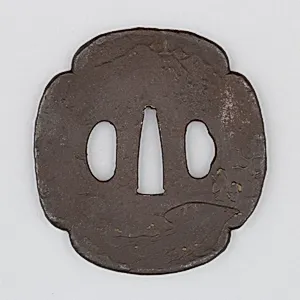
Sword Guard (Tsuba)
Unknown Artist
possibly 18th century
Medium
Iron
Dimensions
H. 3 1/8 in. (7.9 cm); W. 2 15/16 in. (7.5 cm); thickness 3/16 in. (0.5 cm); Wt. 4.4 oz. (124.7 g)
Classification
Sword Furniture-Tsuba
Culture
Japanese
Department
Arms and Armor
Museum
Metropolitan Museum of Art, New York, NY
Credit
Gift of Bashford Dean, 1919
Accession Number
19.154.15
Rights
Public Domain
Art Historical Context
This elegant iron tsuba, or sword guard, served as a vital component of the Japanese katana or wakizashi, shielding the wielder's hand while adding aesthetic flair to the weapon. Dating possibly to the 18th during Japan's Edo period, it exemplifies the fusion of functionality and artistry in samurai sword fittings. Tsuba were not mere armor but miniature sculptures, often pierced, hammered, or inlaid with motifs drawn from nature, mythology, daily life, reflecting the wearer's status and philosophical outlook. Crafted from sturdy iron, this example measures a compact 3 1/8 by 2 15/16 inches (7.9 x 7.5 cm), with a thickness of just 3/16 inch (0.5 cm) and a weight of 4.4 ounces (124.7 g)—ideal for balance on a sword hilt. Iron tsuba, prized for their durability and potential for intricate surface treatments like patination or openwork (sukashi), highlight the mastery of Japanese metalworkers. Though the artist's identity remains unknown, such pieces underscore the Edo era's golden age of sword decoration, when peace allowed artisans to elevate arms into wearable art. Acquired as a gift from Bashford Dean in 1919, this tsuba graces the Metropolitan Museum of Art's Arms and Armor Department, inviting visitors to appreciate Japan's rich tradition of blending martial utility with refined beauty.