
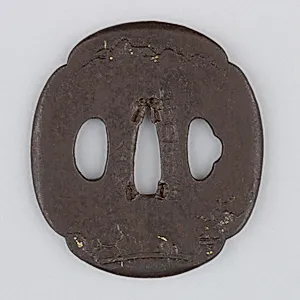
Sword Guard (Tsuba)
Unknown Artist
ca. 1615–1868
Medium
Iron, copper
Dimensions
H. 2 13/16 in. (7.1 cm); W. 2 9/16 in. (6.5 cm); thickness 3/16 in. (0.5 cm); Wt. 4.2 oz. (119.1 g)
Classification
Sword Furniture-Tsuba
Culture
Japanese
Department
Arms and Armor
Museum
Metropolitan Museum of Art, New York, NY
Credit
Gift of Bashford Dean, 1919
Accession Number
19.154.54
Rights
Public Domain
Art Historical Context
This exquisite **Sword Guard (Tsuba)**, crafted in iron and copper during Japan's Edo period (ca.1615–1868), served as a vital component of the samurai sword. Positioned between the blade and handle, the tsuba protected theder's hand while balancing the weapon. During the Tokugawa shogunate's era of peace, tsuba evolved from purely functional guards into prized works of art, showcasing the refined metalworking skills of artisans. This piece, with its modest dimensions—about 2 13/16 inches high and weighing just 4.2 ounces—exemplifies the period's emphasis on precision and elegance. Japanese sword guards like this one were often pierced, hammered, and inlaid with softer metals such as copper for decorative effect, blending strength with aesthetic appeal. Though the artist remains unknown, the use of iron for durability and copper for subtle highlights reflects traditional techniques honed over generations. Tsuba frequently featured motifs drawn from nature, mythology, or daily life, turning a warrior's tool into a canvas for cultural expression. A generous gift to the Metropolitan Museum of Art from Bashford Dean in 1919, this tsuba invites visitors to appreciate the artistry behind Japan's storied samurai heritage, where even armor spoke volumes about status and sophistication. (198 words)