
Sword Guard (Tsuba)
Unknown Artist
ca. 1615–1868
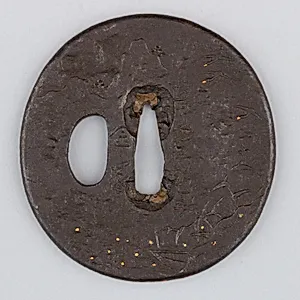
Medium
Iron, copper
Dimensions
H. 2 7/8 in. (7.3 cm); W. 2 3/4 in. (7 cm); thickness 3/16 in. (0.5 cm); Wt. 4 oz. (113.4 g)
Classification
Sword Furniture-Tsuba
Culture
Japanese
Department
Arms and Armor
Museum
Metropolitan Museum of Art, New York, NY
Credit
Gift of Bashford Dean, 1919
Accession Number
19.154.42
Rights
Public Domain
Art Historical Context
This finely crafted **Sword Guard (Tsuba)** from Japan, dating to the Edo period (ca.1615–1868), exemplifies the artistry of samurai fittings during a time of prolonged peace under the Tokug shogunate. Tsuba were essential components of the katana or wakizashi, shielding the hand from an opponent's blade while transforming a weapon into a wearable work of art. Produced by an unknown artisan, it reflects the era's shift from battlefield utility to aesthetic refinement, where sword guards became coveted objects among the warrior class. Forged from iron with copper accents, the tsuba measures 2 7/8 inches high by 2 3/4 inches wide, with a modest thickness of 3/16 inch and a weight of 4 ounces—ideal for balance on a sword hilt. Japanese smiths employed sophisticated techniques like piercing (sukashi), hammering, and patination to create textured surfaces and symbolic motifs, blending strength with elegance. Though specific designs here are unrecorded, such pieces often evoked nature, mythology, or Zen themes, underscoring cultural values of harmony and impermanence. A gift to the Metropolitan Museum of Art from collector Bashford Dean in 1919, this tsuba invites visitors to ponder the samurai's dual role as fighter and connoisseur, bridging Japan's martial heritage with timeless craftsmanship.