
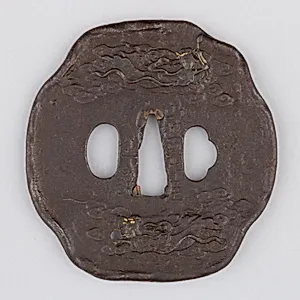
Sword Guard (Tsuba)
Unknown Artist
ca. 1615–1868
Medium
Iron, copper
Dimensions
H. 3 3/8 in. (8.6 cm); W. 3 1/4 in. (8.3 cm); thickness 1/4 in. (0.6 cm); Wt. 5.4 oz. (153.1 g)
Classification
Sword Furniture-Tsuba
Culture
Japanese
Department
Arms and Armor
Museum
Metropolitan Museum of Art, New York, NY
Credit
Gift of Bashford Dean, 1919
Accession Number
19.154.80
Rights
Public Domain
Art Historical Context
This elegant sword guard, or *tsuba*, hails from Japan's Edo period (ca. 1615–1868), a time of relative peace under the Tokugawa shogunate when samurai culture flourished alongside the decorative arts. As a key component of a katana's hilt assembly, the tsuba served a practical purpose—shielding the wielder's hand from an opponent's blade—while doubling as a canvas for artistic expression. Crafted anonymously, as was common for these functional yet refined objects, it exemplifies the fusion of utility and beauty in Japanese arms and armor. Forged from iron with copper accents, this tsuba measures a compact 3⅜ × 3¼ inches, its quarter-inch thickness and 5.4-ounce weight balancing strength and wearability. Artisans employed sophisticated techniques like piercing (nuance work) and inlaying to create intricate designs, often drawing from nature, mythology, or daily life—themes that reflected Zen aesthetics and impermanence. Copper inlays added subtle color and corrosion resistance, enhancing both durability and visual appeal. A gift to the Metropolitan Museum of Art from collector Bashford Dean in 1919, this piece invites visitors to appreciate how everyday warrior tools evolved into treasured heirlooms, embodying Japan's masterful blend of form, function, and philosophy.