
Sword Guard (Tsuba)
Unknown Artist
ca. 1615–1868
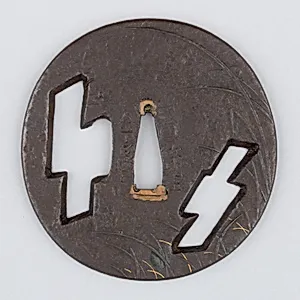
Medium
Iron, silver, copper
Dimensions
H. 3 1/8 in. (7.9 cm); W. 3 1/16 in. (7.8 cm); thickness 1/8 in. (0.3 cm); Wt. 3.8 oz. (107.7 g)
Classification
Sword Furniture-Tsuba
Culture
Japanese
Department
Arms and Armor
Museum
Metropolitan Museum of Art, New York, NY
Credit
Gift of Bashford Dean, 1919
Accession Number
19.154.50
Rights
Public Domain
Art Historical Context
This exquisite *Sword Guard (Tsuba)* hails from Japan's Edo period (ca. 1615–1868), a time of relative peace under the Tokugawa shogunate when samurai culture flourished. As a key component of the katana sword mountings, the tsuba served a practical purpose: protecting the hand from an opponent's blade during combat. Yet, it was far more than utilitarian—tsuba evolved into coveted art objects, showcasing the wearer's taste and status. Crafted from iron inlaid with silver and copper, this tsuba exemplifies masterful Japanese metalworking techniques. The iron was likely pierced and hammered into intricate openwork designs, with softer metals added for shimmering contrast and thematic motifs, common in Edo-era pieces. Measuring just 3 1/8 inches high, its compact form belies the precision required, weighing a substantial 3.8 ounces for balance on the sword hilt. A gift to the Metropolitan Museum of Art from collector Bashford Dean in 1919, this anonymous masterpiece highlights Japan's fusion of function and beauty in arms and armor. It invites visitors to appreciate how everyday warrior tools became enduring symbols of aesthetic refinement.