
Sword Guard (Tsuba)
Unknown Artist
ca. 1615–1868
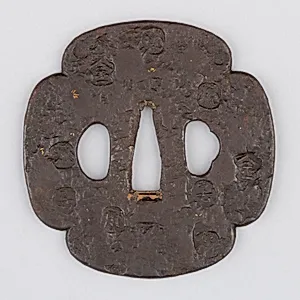
Medium
Iron, copper
Dimensions
H. 3 5/16 in. (8.4 cm); W. 3 1/4 in. (8.3 cm); thickness 3/16 in. (0.5 cm); Wt. 5 oz. (141.7 g)
Classification
Sword Furniture-Tsuba
Culture
Japanese
Department
Arms and Armor
Museum
Metropolitan Museum of Art, New York, NY
Credit
Gift of Bashford Dean, 1919
Accession Number
19.154.82
Rights
Public Domain
Art Historical Context
This elegant **Sword Guard (Tsuba)** hails from Japan during the Edo period (ca. 1615–1868), a time of relative peace under the Tokugawa shogunate when samurai culture flourished. As a crucial piece of sword furniture, the tsuba served as the handguard on a katana or wakizashi, protecting the wielder's hand while adding aesthetic flair. Far from mere utility, these guards evolved into miniature masterpieces, symbolizing the wearer's status and taste. Crafted from iron with copper accents, this tsuba measures a compact 3 5/16 x 3 1/4 inches, weighing 5 ounces—ideal for balance on a warrior's blade. Japanese smiths excelled in techniques like forging, piercing (openwork), and inlaying softer metals like copper for decorative contrast, often achieving a rich patina over time. Though the artist's identity is lost to history, such works reflect the era's mastery of metalwork, blending functionality with artistry in the Arms and Armor tradition. A generous gift from collector Bashford Dean in 1919, it now graces the Metropolitan Museum of Art, inviting visitors to appreciate how everyday samurai gear embodied Japan's profound fusion of beauty, utility, and cultural pride.