
Sword Guard (Tsuba)
Unknown Artist
ca. 1615–1868
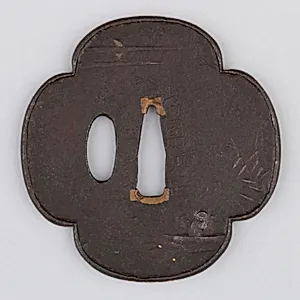
Medium
Iron, copper
Dimensions
H. 3 1/16 in. (7.8 cm); W. 3 in. (7.6 cm); thickness 3/16 in. (0.5 cm); Wt. 2.8 oz. (79.4 g)
Classification
Sword Furniture-Tsuba
Culture
Japanese
Department
Arms and Armor
Museum
Metropolitan Museum of Art, New York, NY
Credit
Gift of Bashford Dean, 1919
Accession Number
19.154.61
Rights
Public Domain
Tags
Art Historical Context
This exquisite *Sword Guard (Tsub)*, crafted in iron inlaid with copper, hails from Japan's Edo period (ca. 1615–1868), a time of relative peace when samurai swords evolved from battlefield weapons into symbols of status and artistry. Measuring just 3 inches across, the tsuba served as a protective hand guard on katana or wakizashi swords, preventing the hand from slipping onto the blade while adding balance and aesthetic appeal. Its compact form—barely thicker than a coin—highlights the Japanese mastery of metalwork, where functionality met intricate design. The openwork design features dynamic motifs of human figures and boats, evoking scenes of daily life or mythical voyages on Japan's seas. These pierced iron patterns, often hammered, filed, and inlaid with softer copper for contrast, exemplify the tsuba maker's skill in creating delicate filigree without compromising strength. During the Edo era, tsuba became collectible art objects, produced by specialized schools and traded among warriors and connoisseurs, blending Zen simplicity with narrative flair. A gift to the Metropolitan Museum of Art in 1919 from collector Bashford Dean, this anonymous masterpiece invites visitors to ponder the samurai's world—fierce yet refined—where even armor bore poetic stories.