
Sword Guard (Tsuba)
Unknown Artist
ca. 1615–1868
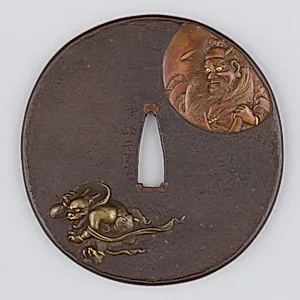
Medium
Iron, copper, gold, brass
Dimensions
H. 3 5/8 in. (9.2 cm); W. 3 1/2 in. (8.9 cm); thickness 1/4 in. (0.6 cm); Wt. 6.9 oz. (195.6 g)
Classification
Sword Furniture-Tsuba
Culture
Japanese
Department
Arms and Armor
Museum
Metropolitan Museum of Art, New York, NY
Credit
H. O. Havemeyer Collection, Bequest of Mrs. H. O. Havemeyer, 1929
Accession Number
29.100.960
Rights
Public Domain
Tags
Art Historical Context
This exquisite **Sword Guard (Tsub)**, crafted in Japan during the Edo periodca. 1615–1868), served as a protective hand guard on samurai swords like the katana. Far from mere utility, tsuba evolved into prized works of art during this era of relative peace under the Tokug shogunate, when sword fittings became symbols of status, craftsmanship, and cultural refinement. Measuring just 3⅝ × 3½, this iron example showcases the meticulous skill of anonymous Edo metalworkers, who transformed functional armor into sculptural beauty. The tsuba's surface features intricate inlays of copper, gold, and brass, a technique highlighting the opulence of Japanese sword furniture. Its design evokes dynamic scenes of men and demons—likely drawing from folklore like yokai spirits—blending human drama with supernatural menace. These motifs not only protected the warrior's hand but also warded off evil, reflecting Shinto and Buddhist influences in samurai iconography. Housed in the Metropolitan Museum of Art's Arms and Armor Department from the H.O. Havemeyer Collection, this tsuba exemplifies how everyday objects embodied Japan's artistic zenith, inviting us to ponder the fierce elegance of Edo warrior culture. (198 words)