
Sword Guard (Tsuba)
Unknown Artist
18th century
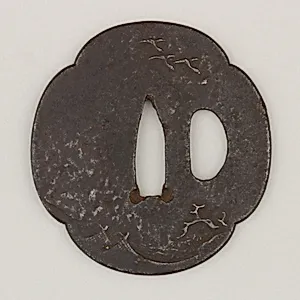
Medium
Iron, copper
Dimensions
H. 2 3/4 in. (7 cm); W. 2 5/8 in. (6.7 cm); thickness 3/16 in. (0.5 cm); Wt. 2.6 oz. (73.7 g)
Classification
Sword Furniture-Tsuba
Culture
Japanese
Department
Arms and Armor
Museum
Metropolitan Museum of Art, New York, NY
Credit
Gift of Mrs. Adrian H. Joline, 1914
Accession Number
14.60.47
Rights
Public Domain
Tags
Art Historical Context
This exquisite 18th-century Japanese guard, or *tsuba*, is a masterful example of Edo-period metalwork from the Metropolitan Museum Art's Arms and Armor. Crafted from iron with copper accents, it measures just 2¾ inches high and weighs a mere 2.6 ounces, perfectly suited to protect the hand of a samurai while adorning the hilt of a katana or wakizashi. Gifted to the museum in 191 by Mrs. Adrian H Joline, it exemplifies the refined craftsmanship of anonymous artisans who elevated functional objects into wearable art. The tsuba's openwork design (*sukashi*) features intricate motifs of houses, mountains, and boats, evoking a serene riverside village nestled amid rugged peaks. Iron was hammered, pierced, and patinated for durability and subtle sheen, with copper likely used for inlays or highlights to add warmth and contrast. These landscape scenes reflect Japan's ukiyo-e aesthetic—celebrating everyday beauty amid nature—blending utility with poetic symbolism. Beyond its defensive role, the tsuba held cultural prestige, signaling the owner's taste and status. In samurai culture, such fittings were personalized treasures, often traded or collected like paintings. This piece invites us to appreciate how Japanese sword furniture transformed weapons into symbols of harmony and artistry.