
Sword-Hilt Collar and Pommel (Fuchigashira)
Unknown Artist
18th century
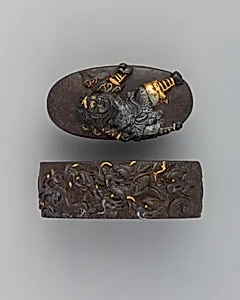
Medium
Iron, gold
Dimensions
Fuchi (a); H. 1 1/2 in. (3.8 cm); Wt. 0.7 oz. (19.8 g); kashira (b); H. 1 3/8 in. (3.5 cm); Wt. 0.5 oz. (14.2 g)
Classification
Sword Furniture-Fuchi-Kashira
Culture
Japanese
Department
Arms and Armor
Museum
Metropolitan Museum of Art, New York, NY
Credit
Gift of Herman A. E. and Paul C. Jaehne, 1943
Accession Number
43.120.1295a, b
Rights
Public Domain
Art Historical Context
This exquisite pair of *fuchigashira*—a sword-hilt collar (*fuchi*) and pom (*kashira*)—hails from 18th-century Japan, the Edo period when samurai culture flourished under the Tokugawa shogunate. These fittings adorned the hilts of katana swords, blending functionality with artistry. The *fuchi*, measuring 1 1/2 inches high, and the slightly smaller *kashira* at 1 3/8 inches, were essential components of *tosogu* (sword mountings), transforming weapons into symbols of status and refined taste. Crafted from iron inlaid with gold, these pieces showcase masterful metalworking techniques typical of Japanese arms artisans. Gold was meticulously hammered or damascened into the iron surface, creating subtle contrasts and enduring elegance despite their small scale and lightweight design (under an ounce each). Such fittings were not mere accessories but expressions of the wearer's wealth and appreciation for *mono no aware*—the poignant beauty of impermanence—elevating everyday armament into wearable art. A generous gift to the Metropolitan Museum of Art in 1943 from Herman A. E. and Paul C. Jaehne, these anonymous treasures highlight the anonymous genius of Edo-period craftsmen, whose innovations in sword furniture influenced global decorative arts. Visitors, imagine a samurai's grip on this hilt: power tempered by poetry.