
Sword Pommel
Unknown Artist
16th century
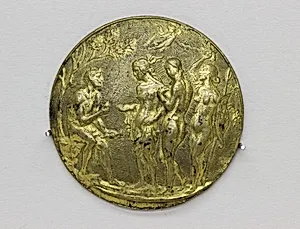
Medium
Bronze, gold
Dimensions
Diam. 2 1/8 in. (5.4 cm); Wt. 1 oz. (36 g)
Classification
Swords-Accessories
Culture
Italian
Department
Arms and Armor
Museum
Metropolitan Museum of Art, New York, NY
Credit
Gift of Stephen V. Grancsay, 1942
Accession Number
42.50.158
Rights
Public Domain
Tags
Art Historical Context
This exquisite 16th-century Italian sword pommel, crafted from bronze inlaid with gold, exemplifies the Renaissance fusion of functionality and artistry in arms and armor. Measuring just 2 1/8 inches in diameter and weighing a mere 1 ounce, it served as the decorative counterweight at the end of a sword hilt. Adorned with motifs of female nudes entwined among plants—evident from its tags—this small accessory reflects the era's humanist revival of classical themes, where the graceful human form celebrated beauty and nature's abundance. In Renaissance Italy, sword fittings like this were status symbols for nobility, blending martial utility with opulent decoration. Italian armorers, masters of metalwork, employed techniques such as gilding and low-relief carving to create intricate designs that evoked antiquity's myths and gardens. The gold accents not only enhanced durability against corrosion but also signified wealth and refinement, turning a weapon's component into wearable sculpture. Now housed in the Metropolitan Museum of Art's Arms and Armor Department—thanks to a 1942 gift from Stephen V. Grancsay—this pommel invites us to appreciate how Renaissance craftsmen elevated everyday arms into objects of profound aesthetic and cultural value.