
Table
1746–1809
Classification
furniture
Department
Smithsonian Collection
Museum
Smithsonian American Art Museum
Credit
Museum purchase through gift of various donors and from Eleanor G. Hewitt Fund
Accession Number
1938-88-2067
Rights
Public Domain
About this artwork
Research in Progress
Art Historical Context
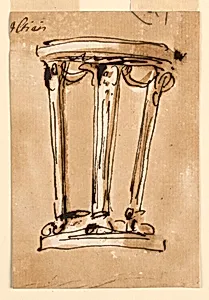
Giuseppe Barberi (1746–1809), an esteemed Italian architect and designer active in Rome during the late Enlightenment era, crafted this elegant *Table* sometime within his lifetime. As a piece of furniture from the neoclassical period, it exemplifies the refined craftsmanship of 18th-century Italy, where functional objects blended artistry with architectural precision. Barberi's work often drew from ancient Roman motifs, emphasizing symmetry, proportion, and understated luxury—hallmarks of the shift from ornate Baroque to classical revival styles. Acquired through museum purchase with gifts from various donors and the Eleanor G. Hewitt Fund, this table now graces the Smithsonian American Art Museum's collection. Its presence in an American institution highlights the transatlantic exchange of decorative arts, as European designs influenced early U.S. elites seeking sophistication. Though research is ongoing and details like the exact medium remain elusive, the table stands as a testament to furniture's role as high art, inviting us to appreciate everyday elegance through a historical lens. (178 words)