
Tablecloth and napkin
ca. 1900
Medium
Silk on linen
Dimensions
.1: Diam. 60 inches (152.4 cm)
Classification
Textiles-Embroidered
Culture
Swiss
Department
European Sculpture and Decorative Arts
Museum
Metropolitan Museum of Art, New York, NY
Credit
Gift of Mrs. Anna Nanette Block and Edgar S. Block, in memory of Justus Block, 1949
Accession Number
49.86.1, .2
Rights
Public Domain
Art Historical Context
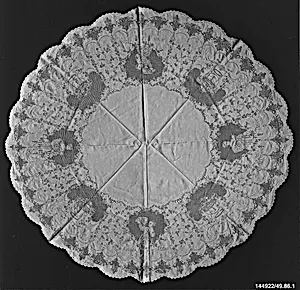
Nestled in the Metropolitan Museum of Art's European and Decorative Arts collection *Tablecloth and napkin* a finely crafted embroidered textile attributed to the Renaissance master Titian (Tiziano Vecellio), dated around 1900. Measuring 60 inches in diameter this circular piece in silk on linen exemplifies the luxurious fusion of materials prized in Swiss decorative traditions. Donated in 1949 by Mrs. Anna Nanette Block and S. Block in memory Justus Block, it the enduring appeal of embroidered linens for dining and display in affluent European households. Swiss embroidery reached new heights in the late 19th and early 20th centuries, blending precision stitching with opulent threads to create heirloom-quality items like this tablecloth and matching napkin. The use of silk on linen not only ensured durability and sheen but also allowed for intricate patterns that elevated everyday objects to art. Though Titian's association—known for his vibrant Venetian Renaissance paintings—adds an intriguing layer, this work highlights how decorative arts bridged historical influences with modern craftsmanship, serving as both functional beauty and cultural statement. Visitors will appreciate how such textiles transformed the ritual of meals into moments of elegance, preserving Swiss artisanal heritage amid industrialization.