
Tall Clock
1800–1810
Medium
Maple, holly, ebony, white pine, tulip poplar
Dimensions
H. 99 1/2 in. (252.7 cm)
Classification
Tall clock
Culture
American
Department
The American Wing
Museum
Metropolitan Museum of Art, New York, NY
Credit
Rogers Fund, 1921
Accession Number
21.67
Rights
Public Domain
Art Historical Context
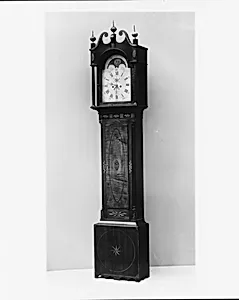
Standing tall at over eight feet, this elegant tall clock crafted by Nathan Storrs between 1800 and 1810 exemplifies the refined craftsmanship of early American furniture making. Created during the young nation’s Federal period, such timepieces served not only as practical instruments but also as symbols of prosperity and intellectual achievement in prosperous households. Storrs, working in the American tradition, combined functionality with decorative appeal, producing a case that reflects the period’s emphasis on symmetry and classical proportions. The clock’s construction highlights the thoughtful use of native and contrasting woods. Maple forms the primary structure, while holly and ebony create delicate inlaid patterns that catch the light. Secondary woods such as white pine and tulip poplar provide sturdy support hidden from view. This combination of materials was typical of skilled American cabinetmakers who maximized local resources while achieving sophisticated visual effects. Now part of the Metropolitan Museum’s American Wing, the clock offers visitors a glimpse into the everyday elegance of the early nineteenth century. Its graceful silhouette and careful detailing remind us how objects of daily life once embodied both technological progress and artistic ambition.