
Tappan
Medium
Drawing
Classification
Drawing
Department
Smithsonian Collection
Museum
Smithsonian American Art Museum
Credit
Smithsonian American Art Museum, Gift of Dr. Fortunato Porotto
Accession Number
1963.6.9
Rights
Public Domain
Tags
Art Historical Context
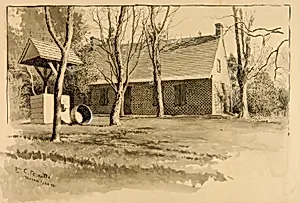
Ernest C. Peixotto’s 1898 drawing “Tappan” presents a quiet rural scene centered on a house and well. Created at the close of the nineteenth century, the work captures an everyday American landscape with careful attention to architectural form and surrounding space. The simple subject matter invites viewers to consider the modest structures that once defined many small communities. As a drawing, the piece demonstrates the medium’s ability to record precise details through line and subtle shading. Peixotto’s approach highlights texture in wood, stone, and foliage, allowing the composition to feel both intimate and grounded. Such works often served as personal studies or travel records, preserving visual impressions of places that might otherwise fade from memory. Now part of the Smithsonian American Art Museum’s collection through the generous gift of Dr. Fortunato Porotto, “Tappan” offers today’s visitors a direct connection to late-nineteenth-century American life and the enduring appeal of straightforward, observational drawing.