
Tasting Poetry Hall
late 19th–early 20th century
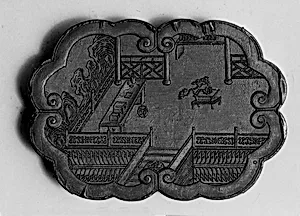
Medium
Pine soot and binding medium; inscribed in gilt
Dimensions
H. 1 7/8 in. (4.8 cm); W. 2 5/8 in. (6.7 cm)
Classification
Ink
Culture & Period
China · late Qing dynasty (1644–1911) or early Republic period (1912–49)
Department
Asian Art
Museum
Metropolitan Museum of Art, New York, NY
Credit
Rogers Fund, 1930
Accession Number
30.76.220
Rights
Public Domain
Tags
Art Historical Context
Nestled among the treasures of the Metropolitan Museum of Art's Asian collection, *Tasting Poetry Hall* a delicate ink stick crafted by Jian Guzhai during the late Qing dynasty (4–1911) or early Republic period (191–49). Measuring just 1 7/8 inches high 2 5/8 inches wide, this petite object is made from pine soot mixed with a binding medium, elegantly inscribed in gilt. As one of the "Four Treasures of the"—alongside the brush, paper, and inkstone—it embodies the refined world of Chinese literati culture, where scholars ground such sticks on inkstones to produce fluid ink for calligraphy and painting. The poetic title, *Tasting Poetry Hall*, evokes the scholarly pursuit of harmony between art and nature, hinting at a studio or retreat where poetry was savored like fine tea. Pine soot ink sticks, prized for their rich blacks and subtle tones, were artistic tools and status symbols, often customized with inscriptions or designs. The gilt lettering adds a luxurious shimmer, reflecting the transitional era's blend of imperial elegance and modern influences. This Rogers Fund acquisition from 1930 offers a tactile glimpse into late imperial China's intellectual life, where even everyday tools inspired creativity. Its architectural tag suggests motifs tied to halls or pavilions, underscoring the era's fascination with idealized spaces for contemplation.
About the Artist
Jian Guzhai
Jian Guzhai — meaning roughly "Studio for Appreciating the Antique" — was a renowned ink-tablet workshop operated by the Wang Jinsheng family in the Huizhou region of Anhui Province, China, one of the historic centers of fine inkstick production. Active during the late Qing dynasty (1644–1911) and possibly into the early Republic period (1912–49), the workshop was celebrated for producing ink tabl...