
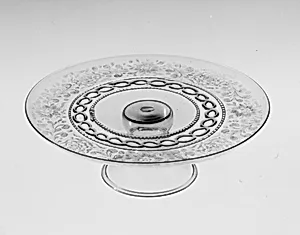
Tazza
Unknown Artist
17th century
Medium
Colorless (slightly tan) and transparent turquoise blue nonlead glass. Blown, trailed, diamond-point (scratch) engraved.
Dimensions
H. 9.4. cm; diam. of rim 29.5 cm
Classification
Glass
Culture
Italian (Venice) or façon de Venise, northern European
Department
Robert Lehman Collection
Museum
Metropolitan Museum of Art, New York, NY
Credit
Robert Lehman Collection, 1975
Accession Number
1975.1.1195
Rights
Public Domain
Art Historical Context
This exquisite *Tazza*, a shallow, footed drinking bowl from the 17th century, exemplifies pinnacle of Venetian glassmaking—or its northern European imitations known as *façon de Venise*. Craft in colorless (slightly tan) glass accented with transparent turquoise blue, it hails from Italy's Venice or workshops in places like the Netherlands, where replicated the city's renowned transparency and vibrancy. Standing just 9.4 cm high with a generous 29.5 cm rim diameter, it was designed for both practical use and display, evoking the opulence of Renaissance banquets. The piece showcases sophisticated techniques: glass was blown into shape, with trails of turquoise added for color and texture, then intricately engraved using a diamond-point tool to scratch fine designs into the surface. Unlike later lead crystal, this nonlead soda-lime glass offered exceptional clarity and lightness, a hallmark of Venetian innovation that influenced European luxury goods. Such tazze were prized status symbols among the elite, blending functionality with artistry. Now in the Robert Lehman Collection at The Metropolitan Museum of Art (acquired 1975), this tazza invites us to marvel at 17th-century craftsmanship, bridging Italian mastery and its continental echoes.