
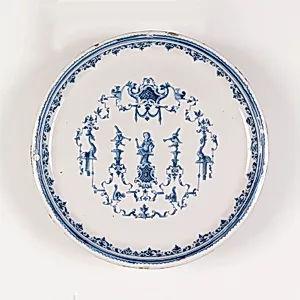
Tazza
Medium
ceramics
Classification
ceramics
Department
Smithsonian Collection
Museum
Smithsonian American Art Museum
Credit
Gift of Eugene V. and Clare E. Thaw
Accession Number
2008-40-5
Rights
Public Domain
About this artwork
Research in Progress
Art Historical Context
Nestled in the Smithsonian American Art Museum's ceramics, the *Tazza* from theérissy Factory (est. ca. 1686) exemplifies early 18th-century French craftsmanship. Dating to around 1720, this vessel—a tazza, or shallow ornamental bowl on a pedestal foot—was designed for both display and ceremonial use, reflecting the opulence of the Rococo era's emerging tastes. Gifted by Eugene V. and Clare E.aw, it highlights the enduring appeal of European ceramics in American collections. The Clérissy, based in Moustiers-Sainte-Marie, Provence, was a powerhouse of faience production—tin-glazed earthenware prized for its vibrant colors and durability. By the early 1700s, the Clérissys mastered techniques like grand feu enameling, allowing intricate designs in blues, manganese purples, and golds to withstand high kiln temperatures. This tazza likely showcases their signature motifs, such as mythological scenes or floral arabesques, bridging Italian maiolica traditions with French innovation and rivaling imported Chinese porcelain. Though research continues on this piece, its presence underscores faience's cultural role in daily luxury and elite dining. Visitors can appreciate how such objects transformed humble clay into symbols of refinement, bridging European artistry with global trade influences.