
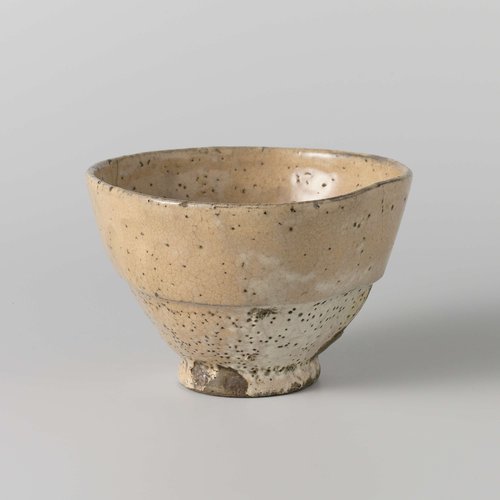
Tea bowl with a rose cream glaze
c. 1600 - c. 1699
Medium
turning
Dimensions
14.4; 9; 6
Rights
Public Domain
About this artwork
diameter 14.4 cm
Art Historical Context
This delicate tea bowl, featuring a rose cream glaze, dates to the 17th century (c. 1600–1699) and exemplifies anonymous craftsmanship from an era when ceramics were central to daily rituals and emerging global trade. Standing at a modest height of 9 with a diameter of .4 cm, its compact form invites intimate handling, perfect for sipping tea in contemplative moments. Crafted using the "turning" technique—where a potter's wheel shapes and refines the clay for smooth, precise contours—the bowl highlights skilled wheel-throwing traditions. The rose cream glaze, with its soft, luminous hues blending pinkish tones into creamy whites, reflects advanced ceramic glazing methods that achieved subtle, iridescent effects through controlled firing. Such glazes were prized for their elegance and durability, evoking natural beauty in an age of porcelain innovation. In historical context, 17th-century tea bowls like this one played a key role in the spread of tea culture across Asia and into Europe, symbolizing hospitality and mindfulness. Though anonymous, this piece whispers of the everyday artistry that fueled the ceramics boom, offering visitors a tactile glimpse into a refined, ritualistic past.