
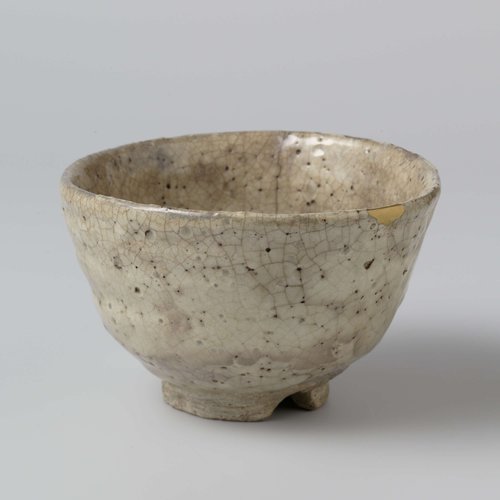
Theekom met een grijs glazuur
c. 1700 - c. 1799
Medium
turning
Dimensions
7.7; 12.9; 5.5
Rights
Public Domain
About this artwork
voet: diameter 5,5 cm
Art Historical Context
Nestled among the delicate ceramics of the 18th, *Theekom met eenjs glazuur* (Teacup with a Grayaze) is a charming anonymous work from around 1700–1799. Crafted through turning—a traditional potter's wheel technique—this petite vessel stands just 7.7 cm tall with a rim diameter of 12.9 cm and a sturdy foot of 5.5 cm. Its subtle gray glaze offers a smooth, matte finish, evoking the understated elegance of everyday Dutch tableware from the period. In the 18th century, tea drinking swept through Europe, particularly the Netherlands, fueling demand for affordable ceramics like this one. Anonymous potters, often working in regional workshops, mastered wheel-throwing to produce uniform, functional forms that mimicked luxury porcelain imports from Asia. The gray glaze, achieved by firing with specific mineral mixes, provided durability and a pleasing, non-reflective surface ideal for daily use. This teacup whispers of domestic life during the Dutch Enlightenment, when simple objects became canvases for subtle craftsmanship. Though unattributed, it exemplifies the skill of forgotten artisans whose work democratized refinement for middle-class homes. A testament to ceramic innovation, it invites us to savor the quiet beauty in the ordinary.