
Tea Bowl with Design of Moon and Autumn Grasses
ca. 1825
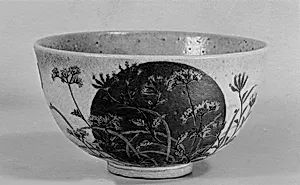
Medium
Clay decorated with crackled glaze and enamels and gold (Kyo ware)
Dimensions
H. 2 3/4 in. (7 cm); Diam. of rim 4 7/8 in. (12.4 cm); Diam. of base 1 7/8 in. (4.8 cm)
Classification
Ceramics
Culture & Period
Japan · Edo period (1615–1868)
Department
Asian Art
Museum
Metropolitan Museum of Art, New York, NY
Credit
H. O. Havemeyer Collection, Bequest of Mrs. H. O. Havemeyer, 1929
Accession Number
29.100.635
Rights
Public Domain
Tags
Art Historical Context
This delicate tea bowl, crafted by Eiraku Hozen around 1825 during Japan's Edo period (1615–1868), exemplifies the refined artistry of Kyo ware from Kyoto. Eiraku, from a renowned family of potters, specialized in vibrant overglaze enamels and gold accents on crackled glazes, creating pieces that blend Japanese subtlety with Chinese-inspired elegance. Measuring just 2¾ inches with a wide rim ideal for whisking matcha, this low-fired ceramic was designed for the intimate ritual of chanoyu, the tea ceremony, where form and surface met the touch and steam of hot tea. The bowl's design features a luminous moon rising amid autumn grasses—likely swaying susuki pampas—evoking the transient beauty of the season. The crackled celadon glaze, shimmering with enamel colors and gold, catches light to mimic moonlight on dew-kissed plants, embodying wabi-sabi aesthetics of imperfection and nature's ephemerality. Such motifs symbolized harmony and contemplation, enhancing the sensory experience of tea gatherings among samurai and merchants. A gem from the H.O. Havemeyer Collection at The Metropolitan Museum of Art, this bowl highlights Edo-era ceramics' cultural role in fostering mindfulness and seasonal appreciation, inviting visitors to ponder its quiet poetry today.
About the Artist
Eiraku Hozen · 1795–1854
Eiraku Hozen (1795–1854) was a celebrated Japanese ceramic artist and the sixteenth-generation head of the Nishimura family, a Kyoto dynasty of potters whose work was closely associated with the tastes of the imperial court and the refined aesthetic culture of the ancient capital. Operating under the artistic name Eiraku — a name that would become synonymous with a particular style of elegant, tec...