
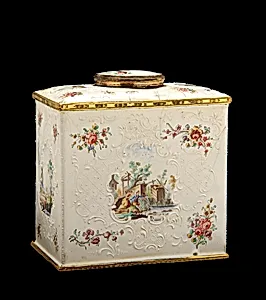
Tea Caddy
1760-1800
Medium
Decorative Arts
Classification
Decorative Arts
Department
Smithsonian Collection
Museum
Smithsonian American Art Museum
Credit
Smithsonian American Art Museum, Gift of John Gellatly
Accession Number
1929.8.245.48
Rights
Public Domain
Tags
About this artwork
The art of painting on enamel flourished in England during the second half of the eighteenth century. A French jeweler, Jean Toutin, had developed a new technique for painting on enamel, in which a gold base was covered first with white enamel, then painted with a design. This craft soon spread to England, where it was adopted by jewelers and goldsmiths. Their intricately painted boxes and curios were fashionable with the wealthy, who often bought them as souvenirs from their travels. Popular it...
Art Historical Context
This elegant tea caddy, dating from 1760-1800, exemplifies the art of enamel painting in late 18th-century England. Crafted as a functional decorative object, it stored precious tea leaves—a luxury commodity symbolizing status among the wealthy. Adorned with intricate scenes likely featuring figure groups, buildings, water and flowers, the caddy reflects the era's taste for whimsical, travel-inspired souvenirs that blended utility with artistry. The technique originated with French jeweler Jean Tout, who revolutionized enamel work by layering a gold base with white enamel before painting delicate designs. This method quickly spread to English jewelers and goldsmiths, producing coveted items like snuff boxes, bonbonnières, and etuis alongside practical pieces such as watches and candlesticks. Tea caddies like this one were prized for their portability and opulence, often acquired during Grand Tours of Europe. Housed in the Smithsonian American Art Museum through the gift of John Gellatly, this unidentified masterpiece highlights how decorative arts bridged fine art and everyday luxury, capturing the refined leisure of Georgian society. Visitors will appreciate its shimmering enamel surface, a testament to craftsmanship that made the mundane extraordinary.
About the Artist
Unidentified ( ) · –