
Tea Service
c. 1885
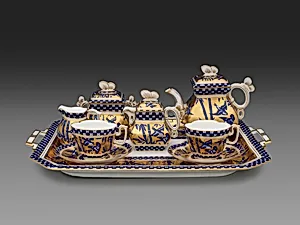
Medium
Bone china, enamel, and gilding
Dimensions
Tray: 3.9 × 44.8 × 33.1 cm (1 1/2 × 17 5/8 × 13 in.)
Classification
ceramics
Department
Applied Arts of Europe
Museum
Art Institute of Chicago
Accession Number
259178
Rights
Public Domain
Art Historical Context
This elegant tea service, crafted around 1885 from bone china with enamel and gilding, captures the refined rituals of Victorian-era social life. Bone china, an English innovation blending bone ash with porcelain clay, offered exceptional strength and a luminous translucency that made it ideal for delicate tableware. Produced during the height of Europe’s tea-drinking culture, such sets transformed everyday hospitality into an art form, where the act of serving tea reflected status, etiquette, and aesthetic taste within middle- and upper-class homes. The decorative techniques further enhance its appeal. Enamel allowed for vibrant, durable patterns—often floral or geometric motifs popular in the period—while gilding added a touch of opulence, catching the light during afternoon gatherings. Though the maker remains unknown, the service exemplifies the Applied Arts of Europe’s emphasis on functional objects elevated through skilled craftsmanship, bridging utility and beauty in late-nineteenth-century design. Today, this piece invites visitors to imagine the conversations and customs it once accompanied, highlighting how ceramics shaped both domestic routines and artistic expression across Europe.
About the Artist
Unknown
The artist designated as "Unknown" in our virtual museum's collection exemplifies a poignant chapter in art history: creators whose identities have faded into obscurity despite the enduring power of their work. With only one known artwork attributed to them in our holdings, this figure represents countless anonymous hands that shaped visual culture across centuries. Museums worldwide, including th...