
Teabowl
Medium
Hard-paste porcelain
Dimensions
1 1/2 × 3 1/8 in. (3.8 × 7.9 cm)
Classification
Ceramics-Porcelain
Culture
German, Meissen with possibly German, Breslau (Wrocław) decoration
Department
European Sculpture and Decorative Arts
Museum
Metropolitan Museum of Art, New York, NY
Credit
Rogers Fund, 1940
Accession Number
40.65.4
Rights
Public Domain
Tags
About this artwork
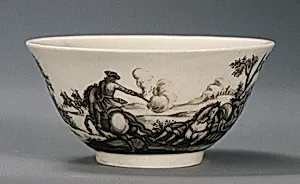
This exquisite teabowl represents early Meissen porcelain from the Böttger period (circa 1720-25), decorated possibly by Ignaz Preissler in Breslau (modern Wrocław, Poland). The Meissen Manufactory, established 1710, achieved Europe's first successful hard-paste porcelain production under Johann Friedrich Böttger's direction, breaking China's centuries-old monopoly on this prized material. Böttger-period porcelain is particularly valued for its experimental glazes and forms, representing Europea...
Art Historical Context
This delicate teabowl, crafted by the Meissen Manactory around 1720–25 during the innovative Böttger period, Europe's first successful production of hard-paste porcelain Founded in 1710 under Johann Friedrichöttger's leadership, Meissen broke China's long-held monopoly on this translucent, durable material, sparking a ceramics revolution. Valued for its experimental glazes and forms, Böttger-era porcelain captured the era's blend of technical mastery and artistic ambition. Possibly decorated by acclaimed Hauser Ignaz Preissler in Breslau (now Wrocław, Poland), the bowl features refined Hausmalerei—independent embellishment on undecorated "blanks" by outside artists like Preissler (1676–1741). Working in black enamel (Schwarzlot) or red, he often depicted chinoiseries or poetic scenes, though this piece's motifs of men, horses, and firearms suggest dynamic European narratives. Preissler's work, sometimes mistaken for Viennese Du Paquier porcelain, highlights the creative freedom of these hybrid objects. At just 1½ × 3⅛ inches, the teabowl reflects 18th-century Europe's obsession with Chinese tea rituals and exotic luxuries. On view in The Metropolitan Museum of Art's European Sculpture and Decorative Arts department (Rogers Fund, 1940), it showcases how German ingenuity met aristocratic tastes, producing treasures that bridged East and West.
About the Artist
Meissen Manufactory|Ignaz Preissler|Böttger Period · 1710–present
The Meissen Manufactory, established on June 6, 1710, by Augustus the Strong, Elector of Saxony and King of Poland, marked the dawn of true hard-paste porcelain production in Europe. Nestled at Albrechtsburg Castle in Meissen near Dresden, the Royal Polish and Electoral Saxon Porcelain Manufactory arose from alchemical experiments begun in 1708 by physicist Ehrenfried Walther von Tschirnhaus and p...