
Teapot
ca. 1735
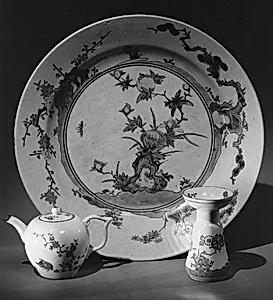
Medium
Hard-paste porcelain
Dimensions
3 1/4 × 5 1/4 in. (8.3 × 13.3 cm)
Classification
Ceramics-Porcelain
Culture
German, Meissen
Department
European Sculpture and Decorative Arts
Museum
Metropolitan Museum of Art, New York, NY
Credit
The George B. McClellan Collection, Gift of Mrs. George B. McClellan, 1941
Accession Number
42.205.129a, b
Rights
Public Domain
Tags
Art Historical Context
This exquisite teapot from the Me Manufactory, dating to around 1735, exemplifies dawn of European porcelain mastery. Founded in 1710 in Saxony, Germany, Me was the first European workshop to successfully produce hard-p porcelain—a durable, translucent that had long been a closely guarded secret of Chinese artisans. By the 1730s, under the patronage of Augustus the Strong, Meissen had perfected the formula using kaolin clay fired at high temperatures, enabling finely detailed shapes and decorations that rivaled Eastern imports. Crafted in the elegant Rococo style emerging at the time, this petite teapot (just 3¼ × 5¼ inches) likely features vibrant floral motifs, a hallmark of Meissen's artistry. Artisans hand-painted enamels over glazed surfaces and sometimes modeled delicate applied flowers, showcasing technical virtuosity in a medium prone to cracking. As a luxury item for the elite, it reflects the 18th-century European craze for tea drinking, imported from Asia alongside the porcelain itself. Housed in the Metropolitan Museum of Art's European Sculpture and Decorative Arts department, this piece from The George B. McClellan Collection (gifted in 1941) invites us to appreciate how Meissen democratized opulence, blending technical innovation with timeless beauty.
About the Artist
Meissen Manufactory · 1710–present
The Meissen Manufactory, established on June 6, 1710, by Augustus the Strong, Elector of Saxony and King of Poland, marked the dawn of true hard-paste porcelain production in Europe. Nestled at Albrechtsburg Castle in Meissen near Dresden, the Royal Polish and Electoral Saxon Porcelain Manufactory arose from alchemical experiments begun in 1708 by physicist Ehrenfried Walther von Tschirnhaus and p...