
Teapot
1671–1708
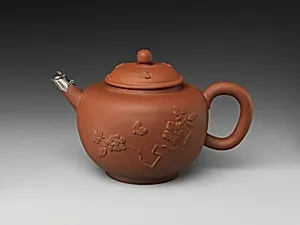
Medium
Red earthenware, silver
Dimensions
Height: 4 in. (10.2 cm)
Classification
Ceramics-Pottery
Culture
Dutch, Delft
Department
European Sculpture and Decorative Arts
Museum
Metropolitan Museum of Art, New York, NY
Credit
Gift of R. Thornton Wilson, in memory of Florence Ellsworth Wilson, 1950
Accession Number
50.211.37a, b
Rights
Public Domain
Tags
Art Historical Context
This charming teapot, crafted by potter Arij de Milde between1671 and 1708, exemplifies the ingenuity of Delft ceramics during the Dutch Golden Age. Hailing from the vibrant pottery center of Delft, de Milde specialized in red earthenware, a warm-toned clay body that offered a rustic yet refined alternative to the more ubiquitous blue-and-white Delftware inspired by Chinese porcelain. At just 4 inches tall, this petite vessel was likely designed for intimate tea rituals, reflecting the growing popularity of tea drinking in 17th-century Europe as a fashionable social pastime among the bourgeoisie. The teapot's construction blends humble red earthenware with elegant silver mounts, enhancing its functionality and luxury appeal. The silver elements—possibly including a lid finial, spout, and handle—elevated the piece from everyday ware to a decorative object, showcasing the collaborative artistry between potters and silversmiths. Floral motifs, suggested by its tagging, adorn the surface, a common motif in Delft pottery that evoked the natural world and exotic imports. Housed in the Metropolitan Museum of Art's European Sculpture and Decorative Arts collection, this gift from R. Thornton Wilson honors the enduring legacy of Delft's craftsmanship. It invites visitors to appreciate how everyday objects like this teapot bridged utility and beauty, embodying Dutch innovation in the face of global trade influences.