
Teapot
1671–1708
Medium
Red earthenware, silver mounts
Dimensions
Overall (confirmed): 4 3/4 × 7 5/16 × 4 7/8 in. (12.1 × 18.6 × 12.4 cm)
Classification
Ceramics-Pottery
Culture
Dutch, Delft
Department
European Sculpture and Decorative Arts
Museum
Metropolitan Museum of Art, New York, NY
Credit
Robert A. Ellison Jr. Collection, Gift of Robert A. Ellison Jr., 2014
Accession Number
2014.712.11a, b
Rights
Public Domain
Tags
Art Historical Context
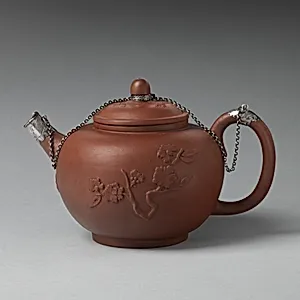
This elegant teapot, crafted by Dutch potter Arij de Milde Delft between 1671 and 1708, exemplifies the refined ceramics of the Dutch Golden Age. Made from red earthenware—a warm, robust clay fired to a rich hue—and adorned with gleaming silver mounts, it measures a compact 4¾ × 7⅜ × 4⅞ inches, perfect for intimate tea gatherings. The floral motifs, hinted at in its decorative tags, likely feature painted or molded blossoms, adding a touch of natural elegance to its functional form. In Delft, a hub of pottery innovation, artisans like de Milde blended local earthenware traditions with influences from imported Chinese porcelain, creating luxurious domestic wares amid the booming tea trade via the Dutch East India Company. Red earthenware teapots with silver accents were status symbols, showcasing masterful techniques in wheel-throwing, glazing, and silversmithing collaboration. This piece highlights the era's fusion of utility and artistry, bridging everyday ritual with opulent design. Now part of the Metropolitan Museum of Art's European Sculpture and Decorative Arts collection, gifted from the Robert A. Ellison Jr. Collection in 2014, it invites visitors to savor the sensory world of 17th-century Dutch hospitality—where a simple pour evoked exotic luxury.