
Teapot
ca. 1745
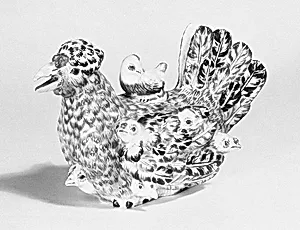
Medium
Hard-paste porcelain
Dimensions
Overall: 4 7/16 × 3 3/4 × 7 in. (11.3 × 9.5 × 17.8 cm)
Classification
Ceramics-Porcelain
Culture
German, Meissen
Department
European Sculpture and Decorative Arts
Museum
Metropolitan Museum of Art, New York, NY
Credit
Helena Woolworth McCann Collection, Gift of Winfield Foundation, 1957
Accession Number
57.172a, b
Rights
Public Domain
Tags
Art Historical Context
This elegant teapot from the Meissen Manufactory, circa 1745, exemplifies the pinnacle of 18th-century European porcelain artistry. Crafted in hard-paste porcelain—a revolutionary material developed by Meissen in 1710, the first in Europe to rival fine Chinese imports—the piece measures a compact 4 7/16 × 3 3/4 × 7 inches, perfect for intimate tea gatherings among the aristocracy. Meissen's workshops in Germany flourished under August III, producing luxurious tableware in the exuberant Rococo style, characterized by playful motifs and intricate detailing. This teapot likely features whimsical chicken decorations, a nod to the manufactory's mastery of molded forms, overglaze enameling, and gilding, which brought vibrant colors and lifelike textures to life after multiple kiln firings. Such objects symbolized wealth and sophistication, blending utility with sculptural finesse. Housed in the Metropolitan Museum of Art's European Sculpture and Decorative Arts department, this teapot from the Helena Woolworth McCann Collection highlights Meissen's enduring legacy in ceramics, where technical innovation met artistic delight. Imagine sipping tea from it amid gilded salons— a true gem of Germanic cultural refinement!
About the Artist
Meissen Manufactory · 1710–present
The Meissen Manufactory, established on June 6, 1710, by Augustus the Strong, Elector of Saxony and King of Poland, marked the dawn of true hard-paste porcelain production in Europe. Nestled at Albrechtsburg Castle in Meissen near Dresden, the Royal Polish and Electoral Saxon Porcelain Manufactory arose from alchemical experiments begun in 1708 by physicist Ehrenfried Walther von Tschirnhaus and p...