
Teapot
ca. 1752–55
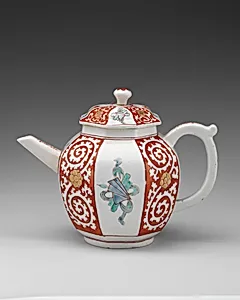
Medium
Soft-paste porcelain with enamel decoration
Dimensions
Height: 5 in. (12.7 cm)
Classification
Ceramics-Porcelain
Culture
British, Chelsea
Department
European Sculpture and Decorative Arts
Museum
Metropolitan Museum of Art, New York, NY
Credit
The Hans Syz Collection, Gift of Stephan B. Syz and John D. Syz, 1995
Accession Number
1995.268.173a, b
Rights
Public Domain
Tags
Art Historical Context
This delicate teapot, crafted by the Chelsea Porcelain Manactory around 1752–55, the early elegance of British porcelain production. Standing just 5 inches tall, it is made of soft-paste porcelain—aable, translucent material that British makers developed as an affordable alternative to expensive Chinese imports. The enamel decoration, likely featuring vibrant floral motifs, adds a touch of Rococo whimsy, reflecting the mid-18th-century fashion for ornate tableware amid Britain's booming tea-drinking culture. Chelsea, founded circa 1743 in London, was among England's pioneering porcelain factories, marking a shift toward domestic luxury goods during the Georgian era. Soft-paste porcelain allowed for intricate molding and colorful overglaze enameling, techniques that mimicked Asian wares while showcasing local innovation. This period piece, from the "red anchor" phase of Chelsea output, highlights the manufactory's ambition to rival continental rivals like Meissen. Today, housed in the Metropolitan Museum of Art's European Sculpture and Decorative Arts Department (The Hans Syz Collection, 1995), it invites visitors to savor the artistry of everyday refinement—a testament to how porcelain bridged trade, taste, and technology in 18th-century Britain.
About the Artist
Chelsea Porcelain Manufactory · 1744–1784
**Chelsea Porcelain Manufactory** The Chelsea Porcelain Manufactory, Britain's pioneering porcelain enterprise, was founded around 1743 in Chelsea, London, by two Huguenot silversmiths: Nicholas Sprimont from Liège and Charles Gouyn. Sprimont, trained in Paris as a goldsmith before immigrating to England, brought his expertise in luxury metalwork to the venture, while Gouyn handled early sales th...